Social Practices
Care Against Violence: Gender Violence, Reproductive Justice, and Social Reproduction
Join us for our first workshop to discuss articles in preparation for the journal Care in Common.
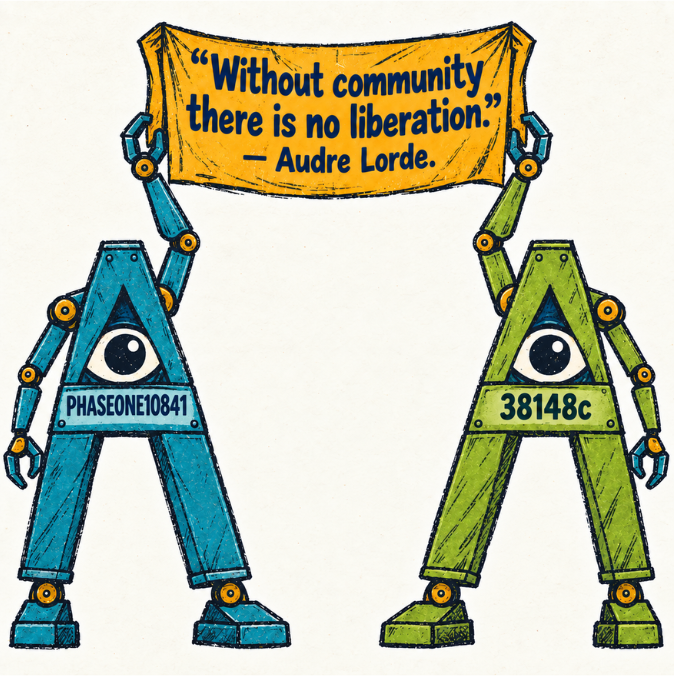
AI for the Common Good?
The post-mortem on this summer’s rogue AI-swarming incident perhaps has a lesson about solidarity.
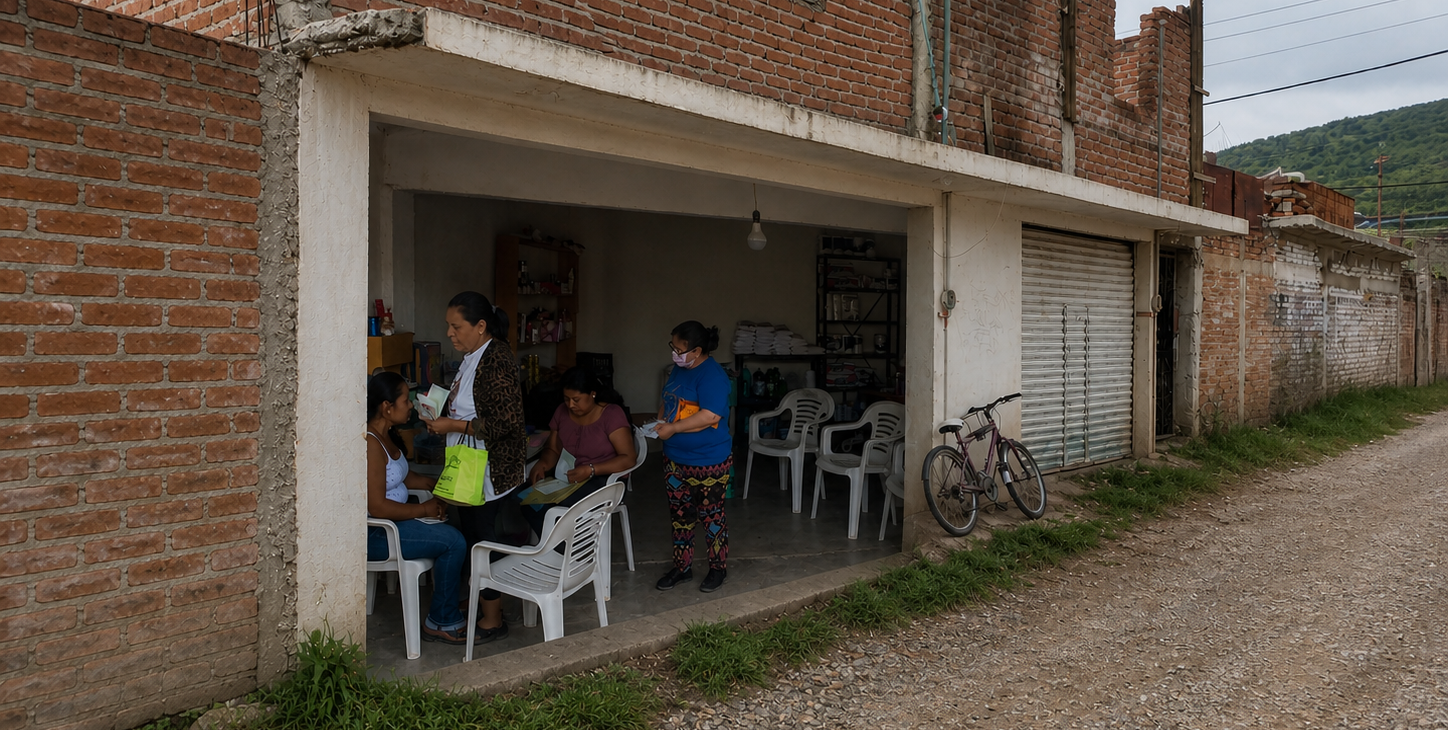
When care becomes infrastructure: community solidarity against gender violence in urban Mexico
In the outskirts of León, Guanajuato, where state institutions fall short, women have built community care networks that function as everyday infrastructure for surviving poverty and gender-based violence. Their practices are not perfect, but they make life liveable.
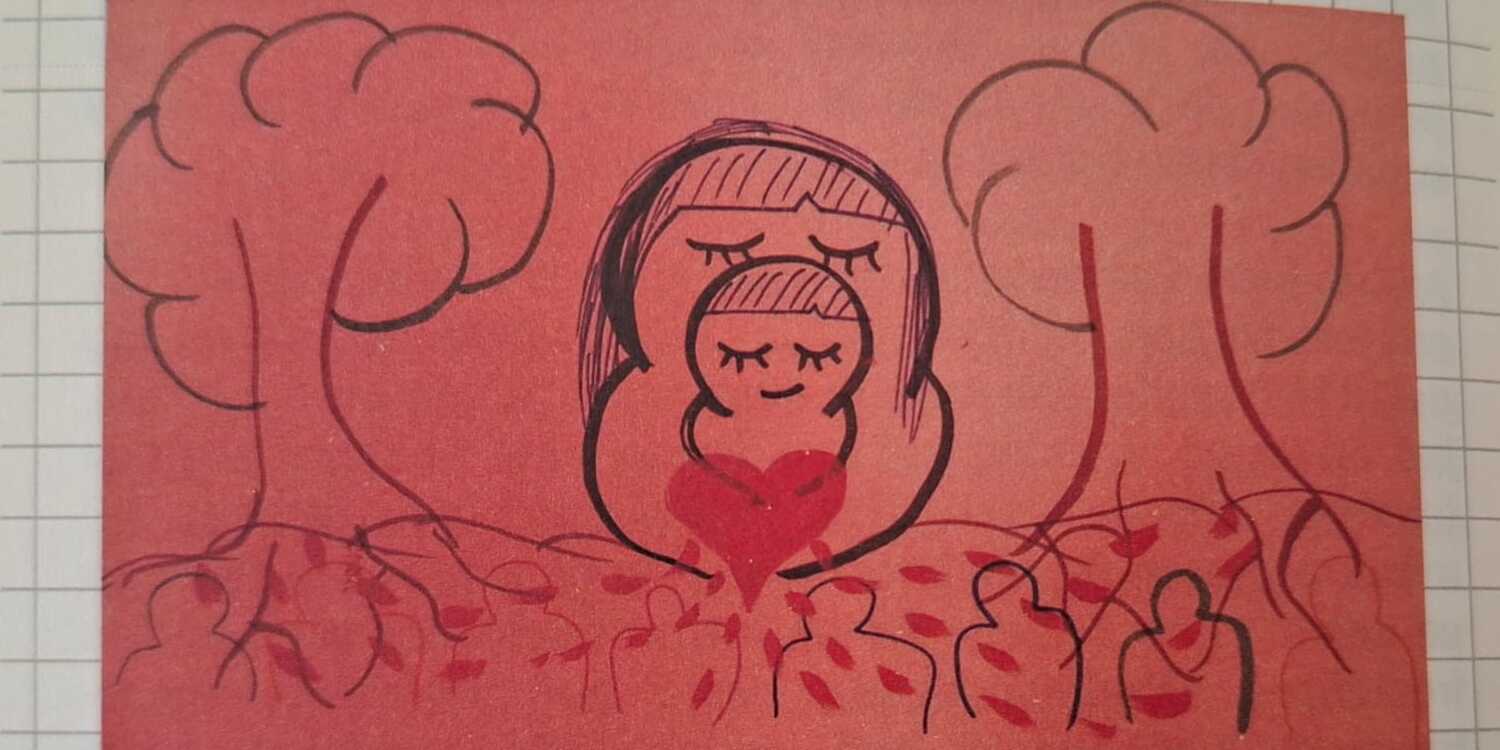
Investigar y escribir sobre cuidados mientras intentas cuidarte… y no morir en el intento
De ello que la encrucijada entre escribir sobre cuidados y no poder cuidar de ti misma por cuestiones estructurales como la explotación —o en este caso la autoexplotación a la que nos vemos forzadas a atenernos para sobrevivir— sea una de las grandes contradicciones que nos atraviesan como investigadoras que se encuentran haciendo una revaloración de este tipo de trabajo.
Care and Territory
Join us for the last session in our Working Papers Seminar series! This time featuring two working papers on community, care, and territory in Mexico: one tracing collective care practices across Cerro Tepepolco and the chinampas of Xochimilco, expanding care beyond the human to encompass land, water, and biological diversity, and another examining how anarcho-magonista women sustained the Mexican Revolution through emotional labor and mutual aid. Response by Holly Worthen (Benito Juárez Autonomous University of Oaxaca).
Friday, April 24, 2026
12:00-2:00 PM (EDT)
Online (Zoom – Translated captioning available)
Registration free but required
Ancestral Care
Join our second-to-last Working Papers Seminar with Evan Auguste (CUNY) and Nadège Robertson (Foundation Espoir) as we explore Lakou Tanama — healing circles rooted in African and Taino worldviews that invoke ancestral memory and communal care to support Haitian communities amid crisis, reclaiming political agency and challenging narratives that pathologize Haitian identity. Comments by Deborah Jenson (Duke University).
Friday, April 17, 2026
12:00-1:15 PM (EDT)
Online (Zoom – Translated captioning available)
Registration free but required

Commuting, Care and Wellbeing
Depopulation in rural areas is driven by youth outmigration and ageing. Limited access to jobs and services increases reliance on commuting, creating time burdens that disproportionately affect women due to unequal care responsibilities, reducing their wellbeing.
Cuidados Comunitarios
Join us to learn about community care practices as situated responses to gender-based violence and urban precarity in León, Guanajuato, Mexico through research by Marcia Moreno Benítez (ITESO), with a response from Verónica Gago (UBA)
Wednesday, April 8, 2026
1:25-2:40 PM (EDT)
Online (Zoom – Translated captioning available)
Registration free but required
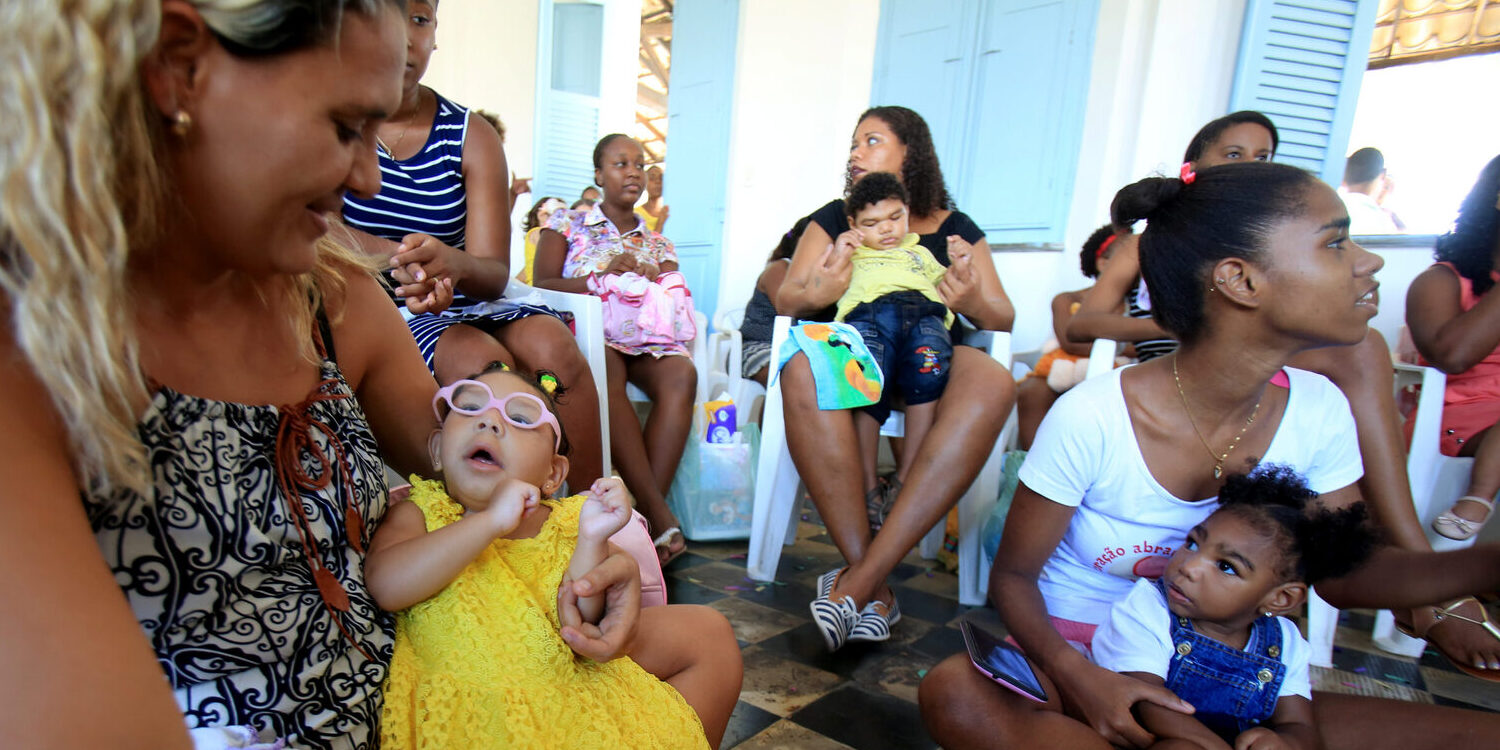
Debilitating Care
Brazil’s Zika epidemic left thousands of children with congenital Zika syndrome (CZS), most born to structurally vulnerable Black and mixed-race mothers who now carry the burden of lifelong care. The relentless demands of caregiving—shaped by poverty, fragmented services, and bureaucratic barriers—gradually wear mothers down physically and mentally. Their stories show how epidemics produce wider, unevenly distributed forms of embodied harm beyond those directly diagnosed with disease.
Infrastructures of Wellbeing
Another webinar! Join us to learn about the link between geography, gender, and subjective well-being in Italy through research by Erica Aloè (Sapienza University of Rome), Roberta Di Stefano (Sapienza University of Rome), Marina Zannella (ISTAT), and Alessandra De Rose (Sapienza University of Rome).
️ Friday, March 27, 2026
⏰12:00-1:15PM (EDT)
Online
Registration free but required
Everyday Ecologies: Working with Soil Time
A conversation and an opportunity to get up close to the living (and dying) post-plantation soils at the Duke Campus Farm, and to think together about the limits of repair. We’ll read an article by Anna Krzywoszynska and learn practical techniques for cultivating the Piedmont’s notoriously heavy clay soils.
️ Saturday, April 25, 2026
10:00AM-12:00PM
Duke Campus Farm
Light breakfast included
Registration is free but required
Breakdown: Thinking and Making Compost Together
This session centers compost as both material process and theoretical problem, exploring decay, waste, labor, and transformation through collective compost-making and discussion.
️ Saturday, March 28, 2026
10:00AM-12:00PM
Duke Campus Farm
Light breakfast included
Registration is free but required