Working Papers Blog

Tejiendo desbordes para continuar cuidando: el caso de los comedores populares de Lima, Perú
Las mujeres de los comedores populares generan diversas formas de agencia conscientes o no, feministas explícitas o no, para asegurar directa e indirectamente el cuidado. Se trata de un ejercicio de desborde constante del Estado desde lo cotidiano y, a través de relaciones de cooperación y/o confrontación con el Estado.
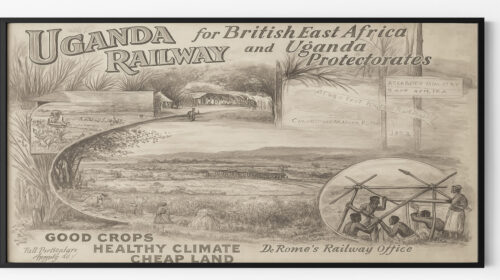
Dispossession, World Ecology, and Care: A View from Kenya
Capitalism remakes relations among humans and between humans and more-than-human natures. This process has fostered a minimalist, productivist notion of care, commodifying or eroding relations that resist accumulation. Focusing on colonial Kenya, I explore how ecological crises and commodification disrupted interspecies patterns of care central to pastoral Maasai lifeways.

Governance of “Care” as an Urban Resource?
Care-full Municipalism offers a theoretical and policy vision for rethinking urban governance in ways that prioritize life-making over profit-making, sustainability over extraction, and collective responsibility over individual burdens.

Surviving the Future: Practices of Care in A’a Teyze’s Garden
The labors of Afro-Turks with the natural world that lie outside of purely productivist grammars of relating within which they are entangled “spatialize acts of survival” that are disruptive enough as to wage war against domination.
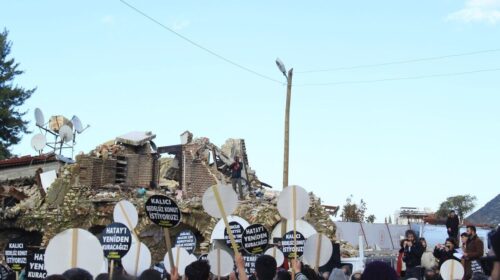
The Courage and the Scourge of Caring: Coal Miners’ Earthquake Search and Rescue Work
The Soma coal miners translated their underground skills into life-saving care after the February 6, 2023, earthquakes, acting swiftly where the state failed. Using traditional mining techniques, they reinforced the rubble, creating moments of survival through expertise, solidarity, and sheer physical courage. Their intervention exposes how care under capitalism remains reactive—yet, when organized, it holds the potential to resist collapse and build a different future.

Destruction as Care
Destruction as care means imagining more-than-human flourishing. The experience of Galician common lands challenges the idea that care only sustains life. Acts of destruction, like cutting trees, can also be care, questioning whose life is being reproduced and why. More-than-human relationalities in land management expand ideas of ecological reciprocity.

Caring in, for, and of the Venetian Lagoon
Venice and its lagoon are an excellent showcase and laboratory for how social and environmental intertwine. Care writing offers many mature theoretical perspectives that combine the analysis of social and environmental systems and call for a joint study of human and nonhuman care. The time is ripe for the next step: joint empirical research on these topics, emphasizing the need for immediate action to address global care and environmental crises.

Discretion or Standardization? How States Assess Eligibility for Home Care
Millions of elderly people and people with disabilities depend on Medicaid-funded home care services. But there is a lot of variation in how states evaluate home care eligibility. Standardized assessments leave room for discretion and interpretation of what constitutes disability – which can be both a tool for personalized care and an obstacle for developing quality benchmarks.
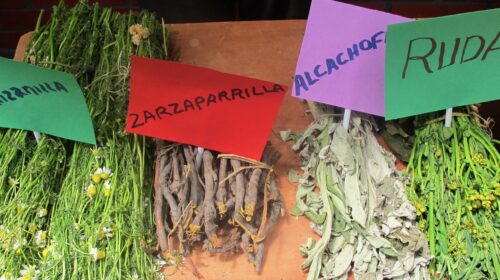
Extraction, Nourishment, and the Labor of Healing in Bolivia
Indigenous traditional healers in Bolivia expressed optimism when Evo Morales expanded opportunities for them to work in the formal health care system. Yet some also grew frustrated when they received no salary and minimal material support in public institutional settings.

Beyond Deficit: Masculinity and Young Men’s Care Work
The world is changing, leading to a re-examination of manhood. The traditional idea of a strong, silent man who refrains from showing emotion has received increased attention as we recognise the harmful effect of these behaviours. Consequently, there is a growing call to promote caring expressions of masculinity.

Marginal children: child support guidelines and the (de)value of care
Traditional child support models underestimate the cost of raising children by ignoring unpaid care work and shared living expenses. A proposed “Dignified Living Model” centers care and interdependence, ensuring support reflects the well-being of both children and parents, based on income and custody arrangements.

Feminist Abortion Accompaniment: An Emerging Model of Care in the U.S.
The Latin American model of feminist abortion accompaniment has emerged in the U.S. as a grassroots response to restrictive abortion laws and barriers to access. Networks such as Mexico’s Las Libres provide free abortion pills and virtual support powered by transnational, intergenerational feminist solidarity