
About Care Talk
Welcome to Care Talk!
This blog was founded by Nancy Folbre to engage researchers, students, journalists, and others interested in the “care sector”– an important part of our economy devoted to the direct care of others through the family, the community, the market, and the state. In collaboration with Jocelyn Olcott and the Revaluing Care in the Global Economy network, the blog now features posts by researchers working in the quantitative and qualitative social sciences as well as the humanities to explore the problems of:
1) how to measure economic contributions made by families and communities;
2) the shortcomings of the standard “business model” based on profit maximization and consumer choice as a means of delivering effective care services through the market;
3) poor institutional design in the U.S. public sector, which often fails to deliver equitable, efficient, or politically sustainable systems of care provision; and
4) the analysis of alternative models for ensuring equitable access to and valuation of both paid and unpaid care.

Legacies of the 1965 US Immigration Reforms
The 1965 Hart-Celler Immigration and Naturalization Act severely curtailed immigration of care workers to the United States, creating a significant care deficit in many families.

Caregiving at the Crossroads of Labor and Immigration Law
Temporary visa programs leave participants at the mercy of their employers, and therefore susceptible to abuse. Home care workers hoping to enforce their rights have two options: complain to the Department of Labor or pursue private litigation

Guestworkers or Culture Ambassadors? The US Au Pair Program
Caught up between the ambiguous migration regulations of family membership and cultural exchange, au pairs find themselves in precarious positions concerning their paid and unpaid labor

Canada’s “Citizens in Waiting”
Canada’s vaunted path to citizenship for care workers is seriously flawed.

Injustice in Temporary Migrant Care Worker Programs
Employment law’s limited view of the migrant care worker merely as an employee defies Immigration law’s acknowledgement of the social need of care workers. By characterizing migrant care workers as isolated employees, Temporary Foreign Worker Programs dissociate care workers from their own social relationships.

Claudia and Care
Hearty applause for the honor paid to this year’s winner of the Nobel Prize for Economics should be combined with a critical look at her work.

The Uncaring Rewards of Paid Care
Field research conducted in Teeside in northeast England highlights the links between precarity and low pay for workers providing long-term care.
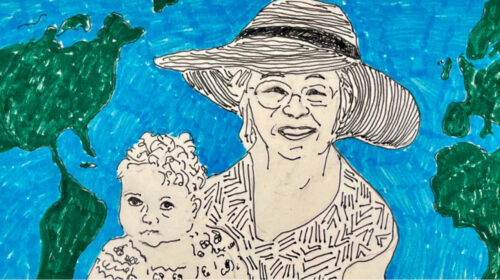
Caregiving Skills for the Planet
Reflections on why we need to consider social and ecological caregiving together.

How a Dashboard on the Care Economy Came to Be
The Care Board will provide a dashboard of comprehensive statistics on the U.S. care economy built from the vantage point of caregivers.
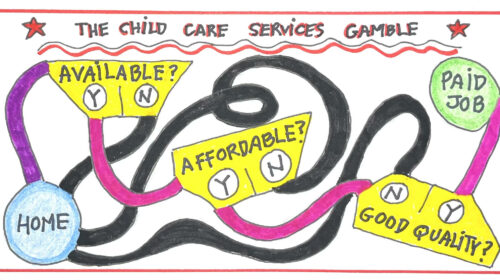
Can Child Care Legislation Increase Women’s Participation in the Paid Labor Force?
This comparative global analysis links to a paper with impressive empirical details and answers “Yes.”

Precarity and Care
Far from opposites, care and precarity are deeply entwined both etymologically and historically. Now, the increasing precarity created by current labor markets fosters a higher demand for care.

Carework Network Summit in Costa Rica
For the first time since the Covid-19 lockdown, the Carework Network convened an in-person summit — this time with a fully bilingual gathering of academics, activists, and policymakers in San José, Costa Rica.

Care Talk 2.0
Welcome to Care Talk 2.0! In February 2008, economist Nancy Folbre launched the original Care Talk blog to reflect on research and policies regarding paid and unpaid carework. Written in a style that made material accessible to journalists, policymakers, and students as well as more seasoned researchers, the blog began with a focus on how to measure the economic contributions of unpaid care, the limitations of commercial models for care provision, and the problems that plague US systems of care provision.
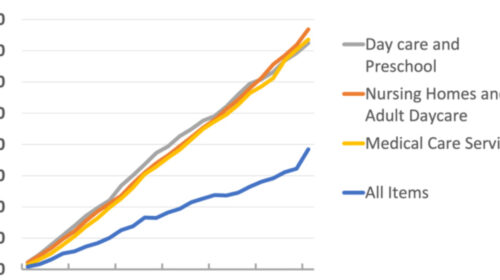
The Escalating Cost of Care Services
Price of three major care services–day care and preschool, nursing homes and adult daycare, and medical care services, have risen much faster since 1998 than the price of the “all items” basket of goods and services that serves as the primary benchmark for analysis of inflation

Justice in the Balance
Instead of trying to walk the tightrope known as work family balance, maybe we should seek work family justice—something we all deserve rather than something we are easily blamed for not achieving on our own.