
About Care Talk
Welcome to Care Talk!
This blog was founded by Nancy Folbre to engage researchers, students, journalists, and others interested in the “care sector”– an important part of our economy devoted to the direct care of others through the family, the community, the market, and the state. In collaboration with Jocelyn Olcott and the Revaluing Care in the Global Economy network, the blog now features posts by researchers working in the quantitative and qualitative social sciences as well as the humanities to explore the problems of:
1) how to measure economic contributions made by families and communities;
2) the shortcomings of the standard “business model” based on profit maximization and consumer choice as a means of delivering effective care services through the market;
3) poor institutional design in the U.S. public sector, which often fails to deliver equitable, efficient, or politically sustainable systems of care provision; and
4) the analysis of alternative models for ensuring equitable access to and valuation of both paid and unpaid care.

Capital for the Kids
A quick look at small moves toward a guaranteed basic income for kids in the U.S. and Canada.

Demanda por el reconocimiento del cuidado como Derecho Humano
La sociedad civil se pronuncia sobre la petición del gobierno argentino a la Corte Interamericana de Derechos Humanos, que escuchará los argumentos del caso esta semana en el tribunal de San José, Costa Rica.

Resisting Gilead
The New-York Historical Society hosts an all-star lineup to discuss histories and possible futures of care.
Demanding Care as a Human Right
Civil society weighs in on the Argentine government’s petition to the Inter-American Court of Human Rights, which will hear arguments in the case this week at the tribunal in San José, Costa Rica.

Glass Walls and Finance Capital
Alicia Girón’s open-access book Economía de la vida offers a comparative perspective on the ways that financialized capitalism has shaped the care economy.

Global Perspectives on Care and COVID
A new collection of essays looks back on a global crisis that became a care catastrophe.

Beyond Privilege: Narrating Diverse Stories of Caring Masculinities
New research on “caring masculinities” challenges traditional gender norms by examining men’s relationality, vulnerability, and nurturing qualities.
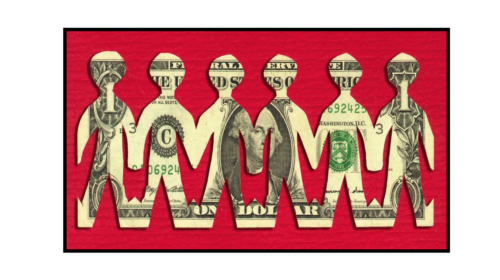
Little Kids vs. Big Business
Current U.S. Congressional efforts to expand the Child Tax Credit offer telling insights into the partisan divide.

Taxing the Stork
New empirical research reveals why European family support policies, while far more generous than those of the U.S., are not as “pro-parent” as they claim to be

The U.S. Child Care Crunch
Stripped of support provided during the pandemic, the child-care industry is cracking up

Responding to Violence with Care
How different might our society look if public safety could be reimagined as caring for people and communities?

CryptoCare©
Perhaps you’re curious to know—just hypothetically–how far the current value of global cryptocurrency could go toward increasing the supply of child care in the U.S.

Podcast: Undervaluing the Work of Care
Check out this wide-ranging, international, and interdisciplinary discussion of the many reasons why care work is undervalued.

Bargain Hunting: Seeking Sustainable Care in a Globalized World
A recent book reckons with the “moral bargain” that provides protections for some at the expense of others.

Getting to Win-Win?: Labor Justice for Migrant Careworkers
The posts in this forum on visas for immigrant careworkers explore possibilities for policies that afford full labor protections and social inclusion for a system that serves both the providers and recipients of care.