The Expendables
What ancient Rome teaches us about human value in the age of AI.
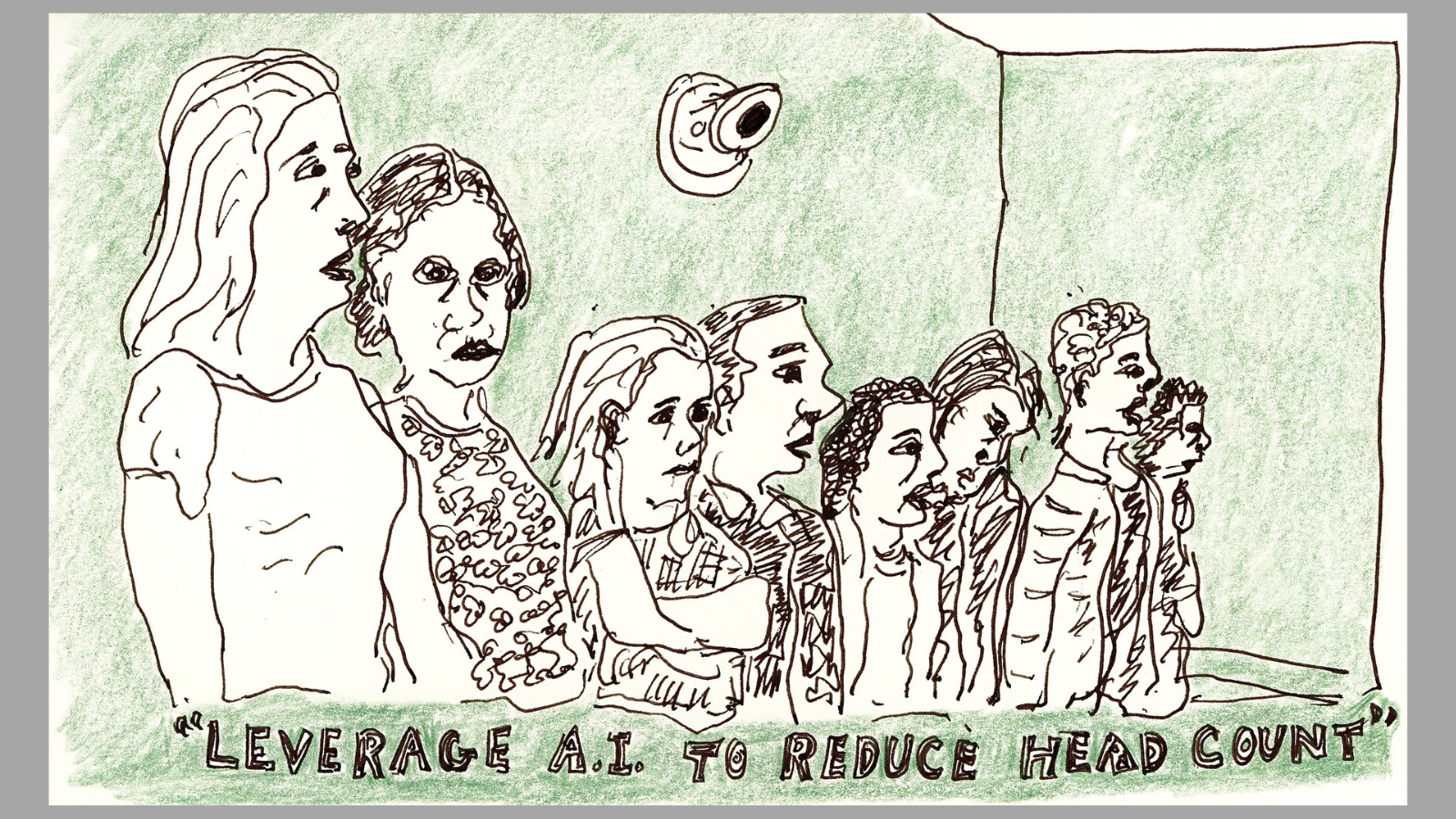
The Roman statesman Cato had a simple rule for managing his agricultural estates: sell old or sickly slaves before their upkeep exceeds their value. If they couldn’t be sold, liquidate them. In Cato’s world, a human being who could not produce surplus for an owner was not merely useless — they were a liability, and liabilities were to be eliminated. This is not ancient history. It is a template.
The British historian G. E. M. de Ste. Croix spent much of his career demonstrating that the slave economies of Greece and Rome were not aberrations or moral failures of otherwise admirable civilizations. They were the foundation of those civilizations. The leisure of Athenian democracy, the grandeur of Roman architecture, the philosophical speculation of the Stoics — all of it rested on the extraction of surplus from human beings who were legally defined as property. When conquest slowed and the supply of new slaves dried up, Rome shifted to breeding slaves — a more expensive method, which tells us something important: the system would pay for reproduction only when it had to. Otherwise, the calculus was straightforward. A body that could not work was a body that could be discarded.
What does this have to do with us? More than we might like to admit. The logic that treats human beings as valuable only insofar as they produce surplus for others did not die with the Roman Empire. It was absorbed, laundered through centuries of political economy, and re-emerged — stripped of its chains but not of its essential structure — in the way modern societies talk about the “unproductive” poor. Listen carefully to contemporary debates about welfare, disability benefits, or the minimum wage, and you will hear Cato’s voice. The poor who cannot find work are described as a “burden” on taxpayers. The elderly whose care costs exceed their economic output are a “demographic time bomb.” Disabled people who require support are discussed in the language of fiscal sustainability, their lives weighed against spreadsheets. The philosopher’s question — what does a person owe to another person simply by virtue of their shared humanity? — is displaced by the accountant’s question: what is the return on this investment?
This is precisely the terrain that feminist political economists have sought to challenge. The care economy framework insists that a vast amount of the labor that sustains human life — raising children, caring for the sick and elderly, maintaining households, providing emotional support — is systematically undervalued or rendered invisible precisely because it does not generate profit for a capitalist owner. Care work is, in the language of mainstream economics, “unproductive.” But this designation is ideological, not descriptive. It reflects who has the power to define value, not what actually sustains life. In my new book, Making Care Work: Why Our Economy Should Put People First (University of California Press), I trace this devaluation across history and across sectors, arguing that reorganizing our economy around care is not a utopian fantasy but a practical and urgent necessity.
De Ste. Croix understood something important: slave societies do not simply exploit workers. They require a particular ideology of human worth to function. In ancient Rome, this ideology was naked — slaves were legally non-persons, and their treatment followed from that legal definition with brutal consistency. In modern capitalist societies, the ideology is more elaborately disguised. We speak of “human capital,” “labor market participation,” and “economic contribution” — phrases that confer value on people instrumentally, through their productive function, while quietly evacuating the idea that people might have unconditional claims on one another.
The implications of this analysis become urgent when we turn to artificial intelligence. We are in the early stages of a technological transformation that promises — or threatens, depending on your perspective — to automate a substantial portion of human labor. Proponents argue that AI will free human beings from drudgery, creating abundance and leisure. What they rarely address is the distributional question: freed for whom, and at whose expense?
The Roman analogy is instructive here, though the parallel runs in an unexpected direction. When Rome’s military expansion slowed and the flow of enslaved people diminished, the slave economy faced a crisis of supply. The response was not to rethink the system but to find new ways to sustain it. Today, as AI begins to displace workers in logistics, customer service, data processing, and increasingly in cognitive and creative fields, the question is not whether technology can replace human labor — it clearly can — but what happens to the human beings who are replaced.
If the dominant framework for assigning human worth remains a productive one — if people matter because they work, and work matters because it generates profit — then the mass displacement of workers by AI will not produce liberation. It will produce a new surplus population, judged by the logic of Cato’s ledger. The language will be gentler than anything Cato used. There will be talk of “retraining,” “transition support,” and “the future of work.” But underneath these euphemisms lies the same question that haunted Roman slave estates: what do you do with expendable bodies, the ones you no longer need?
The political economy of social reproduction offers a framework. It insists that human beings have needs that precede and exceed their productive function. Children must be raised, the sick must be tended, the elderly must be accompanied through the end of their lives — not because these activities generate surplus, but because human life requires them. A society that organized itself around these needs, rather than around profit extraction, would look very different from the one we have. It would count care as work. It would distribute the gains from automation broadly, perhaps through a universal basic income or a significant expansion of public services. It would measure economic success not by Gross Domestic Product (GDP) but by whether people are fed, housed, tended to, and treated with dignity.
De Ste. Croix’s great contribution was to insist that we look at ancient societies without the flattery they have traditionally received — to see Athenian democracy and Roman grandeur as they actually were, built on coercion and expendability. We need the same unflattering clarity about our own moment. The AI economy will not automatically be more humane than the slave economy. It will be exactly as humane as we collectively demand it to be — and not one bit more. The question is whether we will demand enough.
This work is licensed under a Creative Commons Attribution-NonCommercial-NoDerivatives 4.0 International License. Artwork by Nancy Folbre.