Debilitating Care
K. Eliza Williamson
14 March 2026Brazil’s Zika epidemic left thousands of children with congenital Zika syndrome (CZS), most born to structurally vulnerable Black and mixed-race mothers who now carry the burden of lifelong care. The relentless demands of caregiving—shaped by poverty, fragmented services, and bureaucratic barriers—gradually wear mothers down physically and mentally. Their stories show how epidemics produce wider, unevenly distributed forms of embodied harm beyond those directly diagnosed with disease.
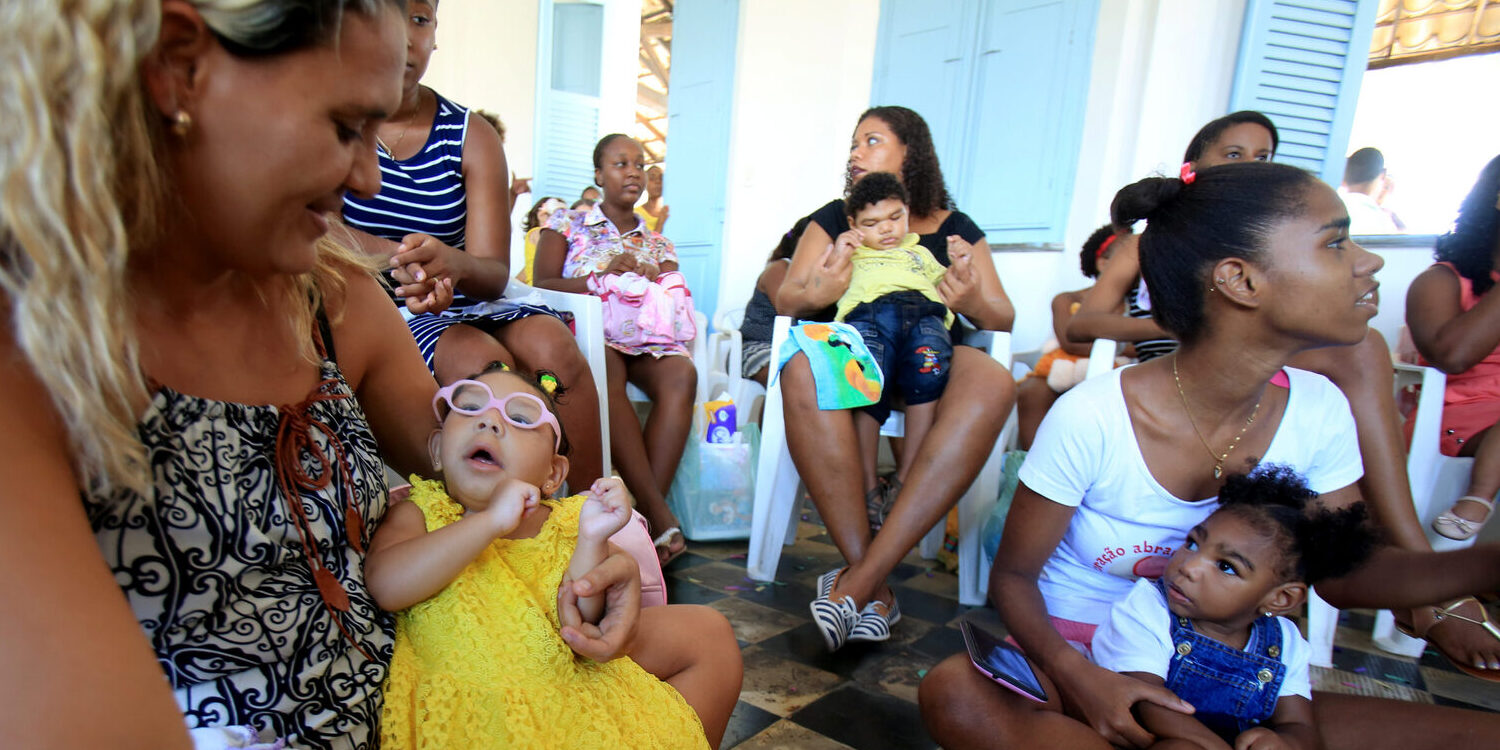
Between 2015 and 2017, Brazil was the global epicenter of a Zika virus epidemic that left thousands of children with multiple, lifelong disabilities which require intensive caregiving. This condition is now known as congenital Zika syndrome, or CZS. Children with CZS have a range of cognitive, motor, and sensory impairments, and most will depend on the care of others for the rest of their lives.
In Brazil, structurally vulnerable communities were most heavily impacted by Zika. Most of the children with CZS were born to Black and mixed-race solo mothers with little formal education (Paixão et al. 2022). This is in part because these communities are most likely to live in underserved urban and rural areas where mosquitoes can readily reproduce and transmit infections. These racialized mothers, in turn, are children’s primary – and often sole – caregivers.
In the fragmented landscape of social support resources, and with the many demands of care in the face of prognostic uncertainty, mothers end up shouldering the vast majority of the care work involved in raising their disabled children. Mothers are worn down by the physically and mentally taxing work of caregiving. This wearing is a gendered and racialized form of debilitation – a process through which bodies are slowly worn down over time by a confluence of structural forces. Documenting caregiver debilitation, I contend, helps us think more expansively and critically about disability in the wake of epidemics and pandemics.
Since 2016, I have been conducting ethnographic research with families caring for children with CZS in Salvador, Bahia. My primary interlocutors are the mothers. (You can read more about my research here).
When I began this research, I thought I was studying disabled children and their non-disabled parents. But when mothers kept telling me about the ways they themselves were being “worn down” and “drained” by caregiving, I came to see that they, too, were being disabled – debilitated – under the weight of relentless care work.
As articulated by Julie Livingston (2005) and Jasbir Puar (2017), debilitation refers to a slow wearing down that rarely rises to the level of “disability” in any official or identitarian sense. Debility indexes “the impairment, lack, or loss of certain bodily abilities” in those who, like my interlocutors, may not ever identify as disabled or be categorized as such by the state (Livingston 2005, 2). My interlocutors themselves used the word debilitada (debilitated) and similar terms to describe the mental and physical state in which intensive caregiving responsibilities had left them. Framing mothers’ wearing down as debilitation foregrounds both the processes through which women’s bodies come to register the ill effects of unequal care responsibilities and the broader, disabling effects of infectious disease outbreaks and their aftermaths.
Already in 2017, when her son Bruno wasn’t yet two years old, Maria felt drained by the constant work of care. She was deeply invested in helping Bruno develop cognitive and motor skills, but she confessed that the work required to do so was often exhausting. “I just ask God for strength, really, because sometimes it’s very tiring,” she told me. She and her son had to be “out and about” nearly all day, every day, shuffling from one appointment to another, sometimes halfway across the city. When they got home in the evenings, Maria said, she didn’t want to “stimulate” Bruno. “I want to sleep. I want to rest, watch a movie. […] I can’t be a ‘therapist’ at home, because of all this correria.”
The word “correria,” from the verb correr (to run), refers to running or going after something (as in pursuing) or working hard on something. Maria was referring to a near-constant “running around” – to care for Bruno at home and to get him to and from his multiple weekly appointments – and “going after” – doggedly pursuing medical care, diagnostic and follow-up testing, and navigating layers of bureaucracy to secure medical and social benefits they were entitled to. The mental and physical labor of care was draining for mothers like Maria.
Caring for a child with multiple disabilities full time is a demanding task. But my interlocutors’ situations were made worse by the chronic underfunding of public healthcare and the disarticulation between health and social services in Brazil, which often resulted in long waits for necessary medical exams and drawn-out battles with Kafkaesque bureaucracy to secure vital economic and housing assistance. Everything, as Maria put it later in her interview, was “so much work.”
Leide, another interlocutor, said caring for her son Diego was “draining” (esgotante). The verb esgotar means to drain, to empty, to use up, to exhaust (Michaelis). Something esgotante is “fatiguing, tiring, strenuous” and makes one “lose strength (perder as forças)” (Michaelis). Chronic pain had become a daily reality for Leide, also as a result of the physical work of caring for her growing son. “Just today,” she told me during our interview in February 2022, she had left the house with Diego in his adapted wheelchair – “the really heavy wheelchair” – already “with back pain,” and then proceeded, as usual in their outings, go “up and down stairs [with Diego in his wheelchair] because accessibility here is awful.” Leide, who, like most of my interlocutors, relied on Salvador’s elaborate but unpredictable public bus system, often faced hours-long, multi-leg journeys to, from, and between children’s early intervention therapy sessions, doctor’s visits, and frequent medical exams. Leide didn’t think things would get better anytime soon. She was, she said, “learning to live with pains.” She referred to herself and other moms as “psychologically debilitated” (debilitada psicologicamente).
The constant work of care was exhausting and draining for mothers, largely because of inequities in income, healthcare, and transportation. In other words, many of the same structural inequalities that had exposed these women to the Zika virus in the first place also made them strain to care for their disabled children and keep their families afloat. Caregiving under these conditions gradually wore mothers down in body and mind, leaving them debilitated.
Engaging with mothers’ stories of debilitation helps us understand the embodied effects of intensive caregiving for disabled children under constraint as the product of social and economic inequities. For mothers of young children with congenital Zika syndrome, the constant “correria” of care is relentless, and it debilitates mothers mentally and physically. Care debilitates not because their children are disabled, but because the brunt of the care work falls on individual mothers who lack meaningful social and material support.
While much of the scholarship on epidemics and disability focuses on disabilities directly caused by epidemic diseases, my research shows that disability – whether or not it is officially recognized as such – is much more widely experienced in the long aftermath of outbreaks than we may think. Mothers’ debilitation through caregiving points to under-examined ways epidemics like Zika, and the structural inequalities that produce and shape their outcomes, become embodied by those beyond those most immediately or obviously affected.
In June 2025, President Lula signed a law that guarantees Zika-affected families a one-time reparations payment and a lifetime monthly pension equal to around six times the minimum monthly wage (salário mínimo). This new law is the result of a decade of parent activism led by mothers. While it is still in the implementation process, Law 15,156 is a watershed in the history of the Zika epidemic and in the lives of affected families. It remains to be seen whether the significantly higher income will translate into better conditions for mother-caregivers, but many of my interlocutors are hopeful.
This work is licensed under a Creative Commons Attribution-NonCommercial-NoDerivatives 4.0 International License. Photo by Joa Souza of Embrace Microcephaly Association meeting, Salvador, Bahia, 27 April 2017.