The Shrinking Cushion of Unpaid Care
Leila Gautham and Nancy Folbre
19 March 2026What happened to the dream of a dual-earner/dual carer household?
Most measures of economic well-being in the U.S. are based on dollars earned or dollars spent, but we don’t live in an entirely market-based economy. The annual American Time Use Survey shows that we spend, on average, about as much time on unpaid work (defined as activities that someone else could be paid to do) as on work that earns a paycheck. These activities are often labeled unpaid work, domestic work, or unpaid care, but they also fit a category that Karl Marx referred to as “production for use” rather than “production for exchange.”
Careful consideration of hours spent on the former suggest that the transition to an economy based entirely on market exchange (typically referred to as “capitalism”) is still underway. Families and communities represent small pockets of a “commons” in which both time and money are shared, providing at least some mutual aid. Unfortunately, the patriarchal institutions that traditionally governed this commons often increased women’s physical and economic vulnerability.
Resistance to patriarchal power has motivated efforts to reduce women’s specialization in unpaid care, and many of its drudgeries certainly need to be reduced. Some aspects of unpaid care, however, are central to the development and maintenance of human capabilities for affection, mutual respect, and cooperation, and many feminist voices (including Janet Gornick, Marcia Meyers, Joan Williams, and Nancy Fraser) urge a transition toward a dual-earner/dual-carer system in which women and men alike earn money and provide unpaid care for their families and communities. While such a transition would likely be more costly for most men than for most women, increased economic inequality creates another obstacle for both: low-earners need long hours of employment to pay their bills, and can’t afford to purchase care services that would allow them the flexibility required to effectively combine paid and unpaid work.
Women in the U.S. entered paid employment rapidly between 1970 and 2000, gaining some economic independence, challenging patriarchal strictures, and contributing to the growth of the market economy. Yet capitalist development itself discouraged productive contributions that couldn’t be easily monetized. Individual success came to be equated to individual earnings, and economic inequality began to rise.
Changes in the gender division of labor exacerbated this trend for two well-known reasons:
Differences in women’s hourly earnings are far greater than differences in the imputed value of an hour of unpaid work in the home, which economists usually set equal to a housekeeper’s wage. As a result, economic inequalities among women have increased. High-earning women tend to marry high-earning men, forming especially high-earning households.
Another, less appreciated factor has been a decline over time in the estimated value of unpaid care work relative to market income—the shrinking cushion of production for own use compared to production for exchange. We explore this factor in a recent journal article focusing on trends between 1965 and 2018, and distilled our findings into a short readable post in The Conversation.
Instead of defining household living standards simply in terms of market income (largely earnings), we rely on a measure of “extended income,” the sum of market income and a lower-bound estimate of the imputed value of unpaid work—multiplying the average number of hours of unpaid work times an average housekeeper’s wage in the same year.
This approximation is pretty crude, but keep in mind that a home-cooked meal is a substitute for one purchased away from home, and family-provided child care and eldercare substitute for services that are costly.
When women enter wage employment, they have less time to devote to unpaid care, and while fathers have begun to provide more child care than in the past, they haven’t made up the difference. Even though average household hours of unpaid work remain high, they have declined over time as reliance on market earnings has increased. Because the estimated value of unpaid work represents a bigger proportion of extended income for low-market-income than high-market-income households, its decline increased inequality in extended income.
Between 1965 and 2018, the gap between high-income households (those at the 90th percentile of incomes) and low-income households (at the 10th percentile) grew by 40 percent when measured by market income alone. But once we account for the lost value of unpaid household work, that gap grew by 66 percent. The extended income of low-income households actually declined slightly, even as market income there grew by 29 percent.
Single-parent families were hit particularly hard. The welfare “reforms” of the 1990s increased work requirements—and restricted the definition of “work” to paid activities. Single-parents’ earnings increased along with their employment, but their time devoted to unpaid work declined, increasing their out-of-pocket spending on items such as child care.
Hopes for a transition to a dual earner/dual carer society for any but the very well-to-do have receded. Instead, we may be moving toward a single earner/no-carer world. Many young people are having a hard time buying a house, much less raising a family. Birth rates have fallen below replacement level. Many youth seem disenchanted with dating, and some pundits predict that, if recent trends continue, one-third of young adults will not get married and one-fourth won’t have kids.
Many conservatives seem convinced that feminists are to blame. But the larger problem is an economic system that underestimates the economic value of work that does not yield a profit.
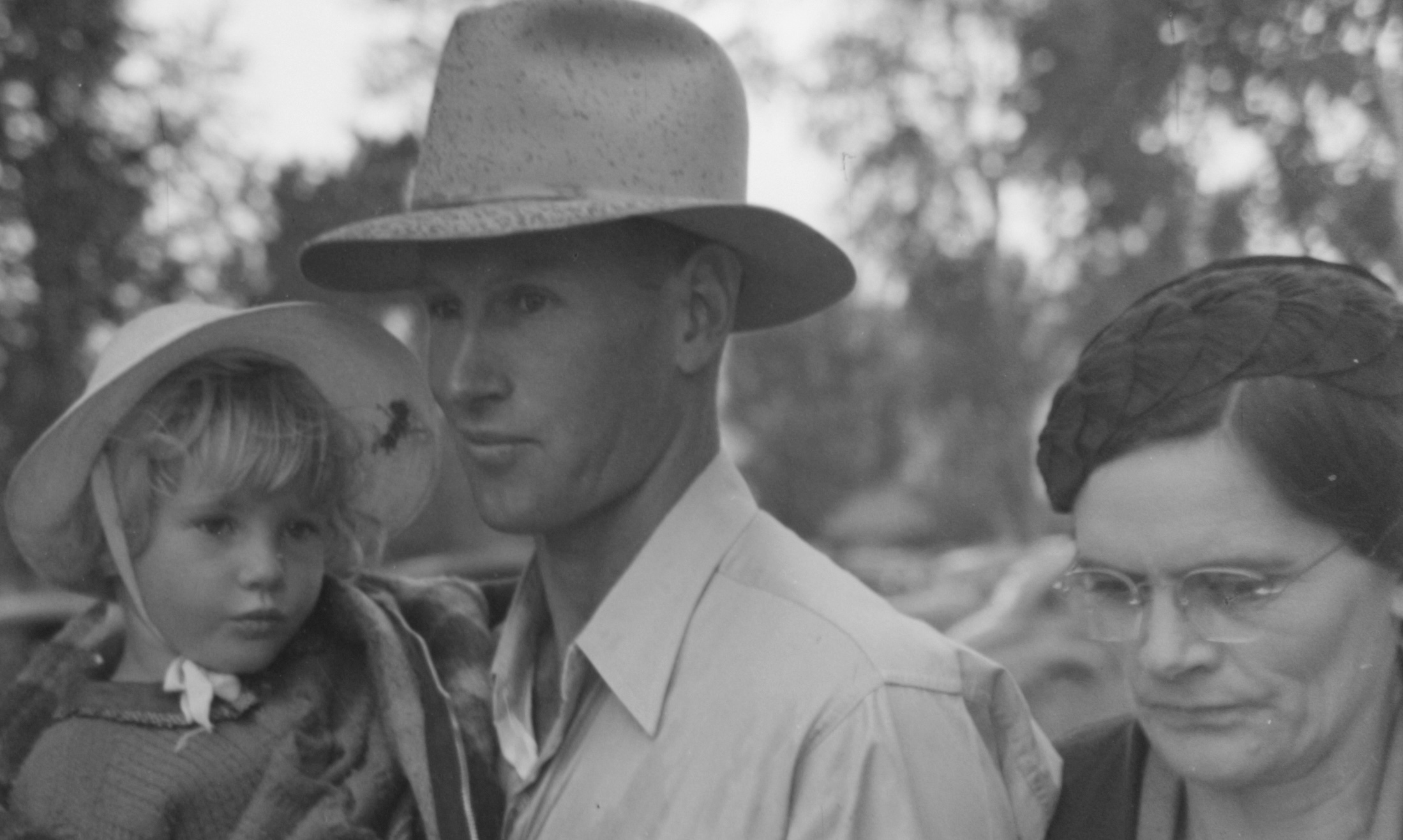
This work is licensed under a Creative Commons Attribution-NonCommercial-NoDerivatives 4.0 International License. Image taken from photo by Russell Lee of 1940 Labor Day picnic.