Surviving the Future: Practices of Care in A’a Teyze’s Garden
Olumayowa Anjolaoluwa Willoughby
17 March 2025The labors of Afro-Turks with the natural world that lie outside of purely productivist grammars of relating within which they are entangled “spatialize acts of survival” that are disruptive enough as to wage war against domination.
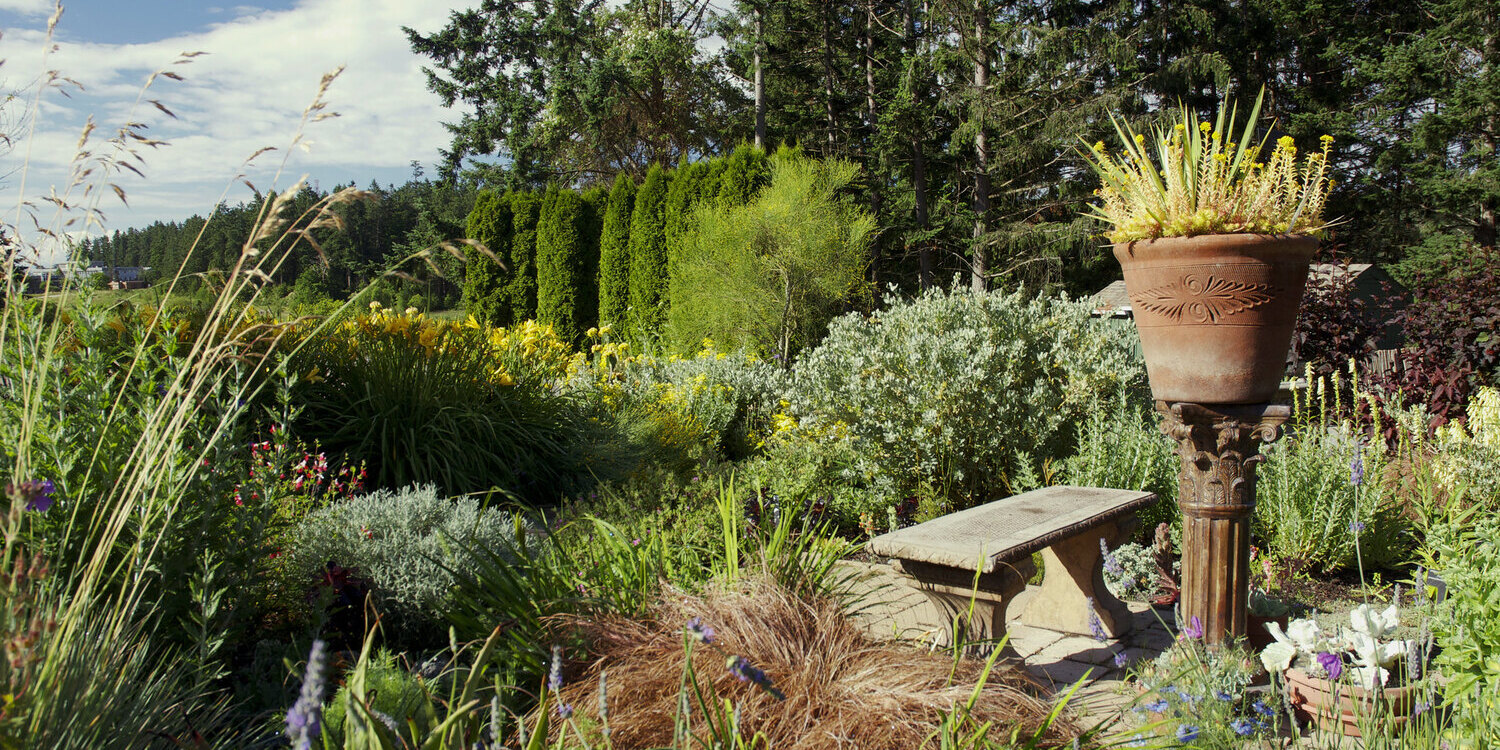
Perched on A’a teyze’s couch, a plate of crackers on the tray next to me, I make out hundreds of thousands of tiny flowers embroidered in the carpet and rug on the floor in front of me. “The stove is hot”, A’a teyze tells me, gesturing to the center of the room where there is a large iron stove connected to the ground–and by way of one singular, thick, grey metal pipe– connected to the ceiling above us. “Be careful”. She hands me a small sprig of fresh nane and three bulbs of hayit tohumu. “These are from my garden” she announces. She points outside. Following her gesticulation, I take in the assortment of yemyesil,very green, things immediately surrounding us— small potted plants, large potted plants, medium plants rooted directly into the ground, shrubs, trees—all within the boundaries of A’a teyze’s small brown fence. I think I can see exactly where the nane is but I have never seen a hayit tohumu plant before. “What are they for?” I ask, looking back into the palm of my hand. A’a teyze shrugs, “for tea, for women’s pains, for cramps”. “Oh. Cool. Thanks,” I respond. I ask her if she goes to the doctor often. She shakes her head saying “güvenmiyorum onlara”. I don’t trust them. “But you trust yourself,” I counter. She purses her lips, replying, “Of course”. I am curious. “Where did you learn about these plants, what to grow, and what they can do?”. “From my grandmothers,” she responds.
Although the word ‘Afro-Turk’ did not enter the Turkish lexicon until after the establishment of the Africans’ Culture & Solidarity Organization in 2006, the “practices of domination” which have “naturalize[d]” both Afro-Turk “identity and place”, “repetitively spatializing” where Afro-Turks “naturally belong” began in 1892 with the forced resettlement and compulsory land cultivation as care of manumitted Ottoman Africans. This was accomplished through “economic, ideological, social, and political processes” that positioned the manumitted Ottoman African body within “what seem like predetermined, or appropriate, places” and assumed that this arrangement was commonsensical”. As a descendant of the manumitted Ottoman Africans who were granted the provisional grounds upon which she lives, A’a teyze and her plot demonstrate that against the backdrop of the compulsory agricultural production that permeates the (literal) ground through which she–as Afro-Turk– is made, labors of Afro-Turks with the natural world that lie outside of the governing grammars through which they are constituted and to which they are held accountable, allow Afro-Turks to assure their own places in the future. While the part played by labor in the transition from manumitted Ottoman Africans to Afro-Turks may have been significant, the labors of Afro-Turks with the natural world that lie outside of purely productivist grammars of relating within which they are entangled “spatialize acts of survival” that are disruptive enough as to wage war against domination.
In 1891, reigning sultan of the Ottoman Empire Sultan Abdülhamit II initiated a program to remove unmarried manumitted Africans living in the provinces of the Ottoman Sahara, resettle them in the interior of Aydin Vilayet onto ‘empty Ottoman lands’that had been deemed suitable for agriculture, and provide with small houses to live in. Sultan Abdülhamit II’s resettlement project was prompted by the need to provide long-term care for manumitted Africans. This care was the remedy for two gubernatorial anxieties: a fear of European colonial powers—specifically the British— encroaching upon Ottoman territory and the rising economic pressure facing the Ottoman government in the wake of the newly non- housed, non-jobbed population into which manumitted Africans had been transformed upon their manumission. The removal of unmarried, manumitted Africans from the provinces of the Ottoman Sahara and their forced resettlement into the interior of Aydin Vilayet by the Ottoman state was implemented in order to provide enough care to keep Christian European intervention at bay. Thus the care of manumitted Africans through their resettlement in Aydin Vilayet was ultimately meant to relieve the Ottoman state by providing it with long-term economic possibility through manumitted Africans’ agricultural labor and territorial protections in the wake of encroaching European powers.
In a 1971 article, cultural critic Sylvia Wynter discusses the relationship between the provision grounds of the enslaved—the plot—where food for domestic consumption was grown, and the monocrop plantation where food production was oriented toward export. Wynter’s analysis “position(s) the plot as a countercapitalist site … taking place alongside and in opposition to the plantation production”. A’a teyze’s labors with the plant life on the plot of land on which she lives constitute countercapitalist forms of autonomy that usher in her future by spatially refusing the compulsory inheritance of linear capitalist time whose algorithm is in fact coded to dispose of her. A’a teyze relies upon herself, her nane and her hayit tohumu to tend to her being in the future rather than the professional actors putatively trained to intervene in that regard. Being the space and place upon which she grows such medicines, A’a teyze’s plot organizes a promissory space which insists that regardless of the productivist grammars that govern her expected relations with the natural world, her futurity shall indeed be guaranteed. A’a teyze is not only an inheritor of the grammars that circumscribe her relationship to the plot on which she lives, but also is in charge of her own future. Because A’a teyze’s plot is situated within “spatial histories as they constitute [her] present geographic organization” her usage of her plot as a space to organize remedies that heal her ailments when she is unwell is able to “alter our notion not only of where [her] future lies but also how (or whether) it arrives”. A’a teyze’s garden space thus constitutes otherwise grammars between people and plants where the interplay between “geographies of domination” (such as Ottoman slavery and forced resettlement practices) and “black women’s geographies” (such as the plot of land on which sit A’a teyze’s house and garden) “come into relief”.
The photo is by Jay Scratch (Original: Flickr Link; Credit: Flickr Link).
This work is licensed under a Creative Commons Attribution-NonCommercial-NoDerivatives 4.0 International License.
Gunseli Berik
Fascinating piece! A breath of fresh air! Did not know about this history of settlement after manumission. Description of a slice of life against a brief historical background. I wanted more, such as the author’s relationship to A’a teyze, their background, and complementary contemporary contextual information on this group in Aydin, citation of Wynter’s piece that is quoted.