Back to the Future? Women’s Work and Care in Argentina
In Argentina, the Milei government’s austerity agenda has dismantled the fragile infrastructures that sustain everyday life. Cuts to care programs and gender institutions have shifted social reproduction back onto women’s unpaid labor. The article traces how this erosion of care undermines both equality and democracy.
When Javier Milei assumed the presidency of Argentina in December 2023, he promised a new age of “freedom.” Behind this libertarian discourse lies a familiar story: deep cuts to social spending, the dismantling of gender institutions, and the privatization of risks that sustain everyday life (Lobato, 2024). For women, these reforms are not abstract -they reshape the fragile balance between paid and unpaid work, between citizenship and survival.
In less than two years, Milei’s government has dissolved the Ministry of Women, Gender, and Diversity, halted the expansion of care centers, frozen gender-based programs, and withdrawn support from community spaces that provided food and assistance in low-income neighborhoods. The shift to a new Ministry of Human Capital is emblematic: social policies once designed to guarantee rights are now reframed through the language of productivity and individual responsibility.
This moment marks more than an episode of fiscal austerity. It signals a deeper transformation in how rights, work, and care are understood. Capitalism does not sustain itself solely through markets. It depends on background conditions -nature, political power, and social reproduction- constituting a specific type of society. In this “cannibal capitalism,” (Fraser, 2023) profit rests on the invisible labor that sustains life. When States retreat, women are the ones who fill the void through unpaid and precarious care work.
Care, Precarity, and the Logic of Cannibal Capitalism
During the existence of the Ministry of Women, Gender, and Diversity, Argentina stood out in Latin America, along with other countries in the region, for recognizing care as a matter of public concern. The Cuidar en Igualdad bill, introduced in 2022, sought to build a National Care System and articulate co-responsibility among the state, families, and communities, based on the notion of care as a human right (the right to care, to receive care, and to self-care, concept that was coined by the Argentinian feminist and researcher Laura Pautassi in 2007, and was later introduced in different human rights instruments in the region and recently recognized by the Inter-American Court of Human Rights within the Inter-American System in Advisory Opinion 31/25).
However, the bill lost its parliament status, and most of the policies that were built lost were dismantled; budget cuts of up to 80% in community kitchens, the suspension of training and certification for caregivers, and the erosion of child-care programs have shifted care back into the private sphere (CELS, 2025; Poy and Dichiera, 2025; Vera et al., 2025; Messina, 2025). When public policies retreat, women absorb the costs -through longer unpaid hours, fewer job opportunities, and deepening poverty (Rodríguez Enríquez, 2015). Recent data confirm this trend: by early 2024, over half of Argentina’s workforce lacked formal employment, and poverty rose to 52.9%, the highest level in two decades (Carmona and Calvo, 2024). Women face informality rates above 43%, wage gaps of 25%, and an average of eight hours a day dedicated to unpaid care, compared to less than four for men. For many, paid work no longer ensures autonomy but becomes a survival strategy amid the collapse of household incomes.
This dynamic reveals the feminization of poverty and precarity: women’s participation in the labor market increases, but under conditions of instability, informality, and low pay. Far from correcting inequalities, the market reproduces them -embedding the sexual division of labor and devaluing reproductive work. By dismantling programs that once recognized care as a social responsibility, the current reforms have intensified a vicious cycle: women’s overload at home limits their access to decent employment, while precarious jobs reinforce dependence on unpaid labor.
What was already a crisis of care, a point where capitalism’s demand for labor collides with its withdrawal from the conditions that make life sustainable (Pautassi, 2016), is now deepening into an unbearable situation. This crisis is not a side effect of adjustment but one of its main mechanisms. By offloading social reproduction onto households, austerity transforms care into a private burden and reaffirms the traditional gender order under a rhetoric of “freedom” and “efficiency.”
Reclaiming Care as a Human Right and a Democratic Matter
The current moment illustrates how neoliberal adjustment is not merely economic but deeply ideological. By redefining citizenship in market terms, it erodes the very foundations of democracy. The promise of formal equality becomes hollow when women’s lives are structured by unpaid work and insecure employment. The dismantling of care infrastructure does not only reduce social protection; it reorders society along gendered lines and sexual division of labor.
In this context, care emerges as a site of democratic struggle. Reclaiming it as a human right and a public matter means recognizing the State’s obligation to sustain life and to guide institutional design with care as a transversal axe. Feminist movements across Latin America have long argued that care should be understood as a collective responsibility, not a private duty. Argentina’s experience makes this claim more urgent. Without State co-responsibility, women’s autonomy is curtailed, social inequalities widen, and democracy itself becomes more fragile.
Revaluing care, then, demands policies that invest in public infrastructure, formalize care work, and guarantee time, income, and services for all. But it also requires a cultural shift: an understanding that sustaining life is not an individual task but a shared condition of citizenship.
To move “back to the future,” as the title of this piece suggests, is to repeat old patterns under new names. Yet it is also a reminder that alternative futures remain possible. If the logic of cannibal capitalism consumes the very ground on which society stands, a politics of care offers a different horizon -one where society is not based on individual competition, but by our collective capacity to sustain one another with dignity.
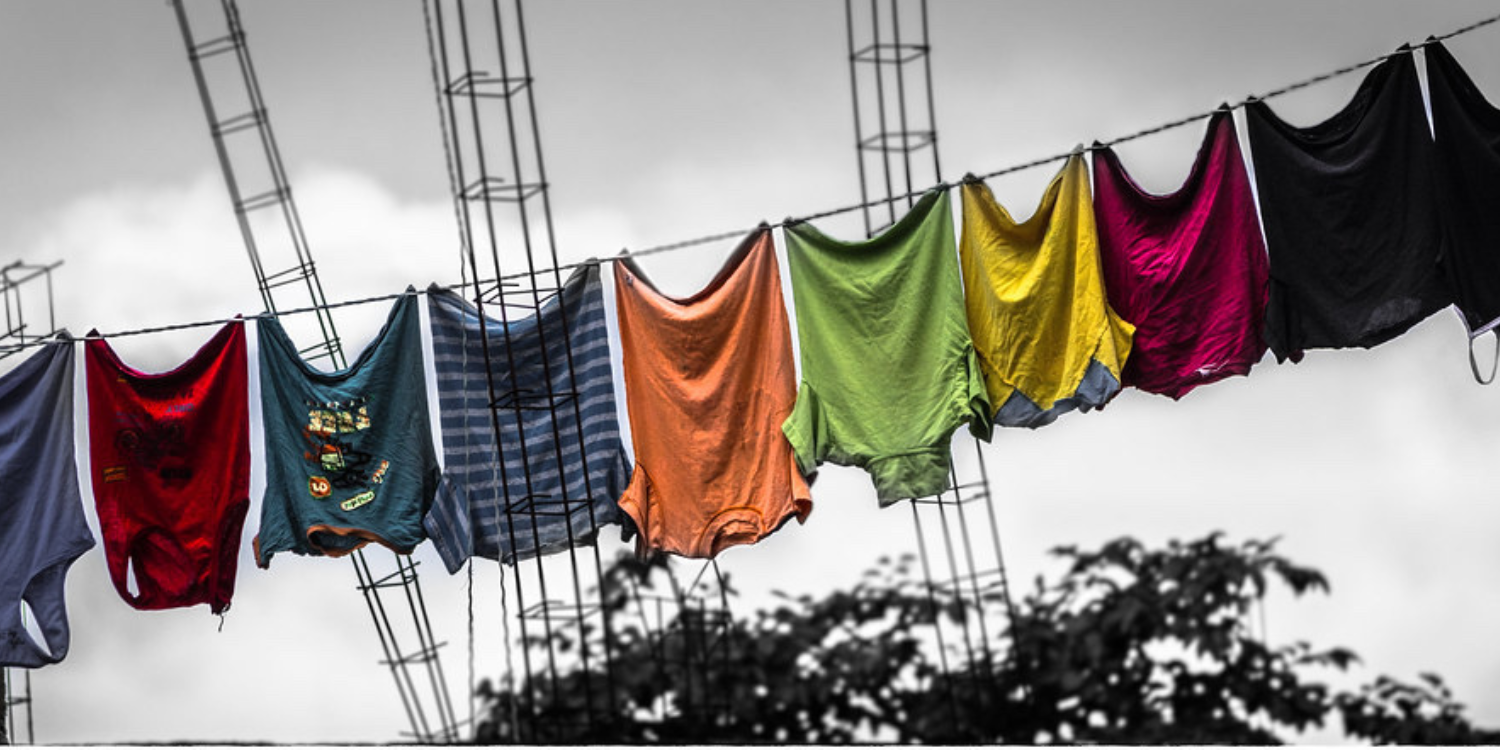
Photo by Mariana Hernández-Montilla: https://www.flickr.com/photos/hybridproject/
This work is licensed under a Creative Commons Attribution-NonCommercial-NoDerivatives 4.0 International License.